

Energy Leadership® Index (ELI) assessment
Most people know themselves until something hard happens. The ELI shows you what you actually do then.
The Energy Leadership Index, or ELI, is an assessment that helps you see the patterns shaping how you think, respond, communicate, and make decisions.
It helps you name patterns you may already sense but have not been able to see clearly.
What the ELI is
The ELI is an attitudinal assessment. A personality test sorts you into a fixed type. The ELI looks at how you are perceiving and approaching life and work right now, and that can change.
It offers a structured way to look at how your mindset, stress responses, emotional patterns, and beliefs influence the way you act, relate, and make decisions.
For some people it is a starting point. For others, it adds depth to coaching already underway. Either way, it gives you a clearer picture of how your energy is being used, where it is being depleted, and where more choice is available.
Why people find it useful
Under pressure, reactions move faster than awareness. Patterns take over before you can name them, let alone change them.
The ELI brings those patterns into view in a way that feels specific and recognizable, most of all in moments that involve other people, decisions, and responsibility.
It can be useful when work starts to feel heavier than it used to, when familiar responses stop helping, when responsibility increases, when you feel stretched thin, or when you are moving through a period of change without a clear next step.
What surprises people is not that the patterns exist. It is how consistently they show up. Once you can see them, you can stop being run by them.
How the assessment works
The ELI is completed online and usually takes about 20 to 30 minutes. It is available through an iPEC-certified coach and is followed by a 90-minute debrief, which is where most of the insight becomes useful.
In the debrief, we look at your results and connect them to what you are experiencing in your life, work, relationships, leadership, or decision-making.
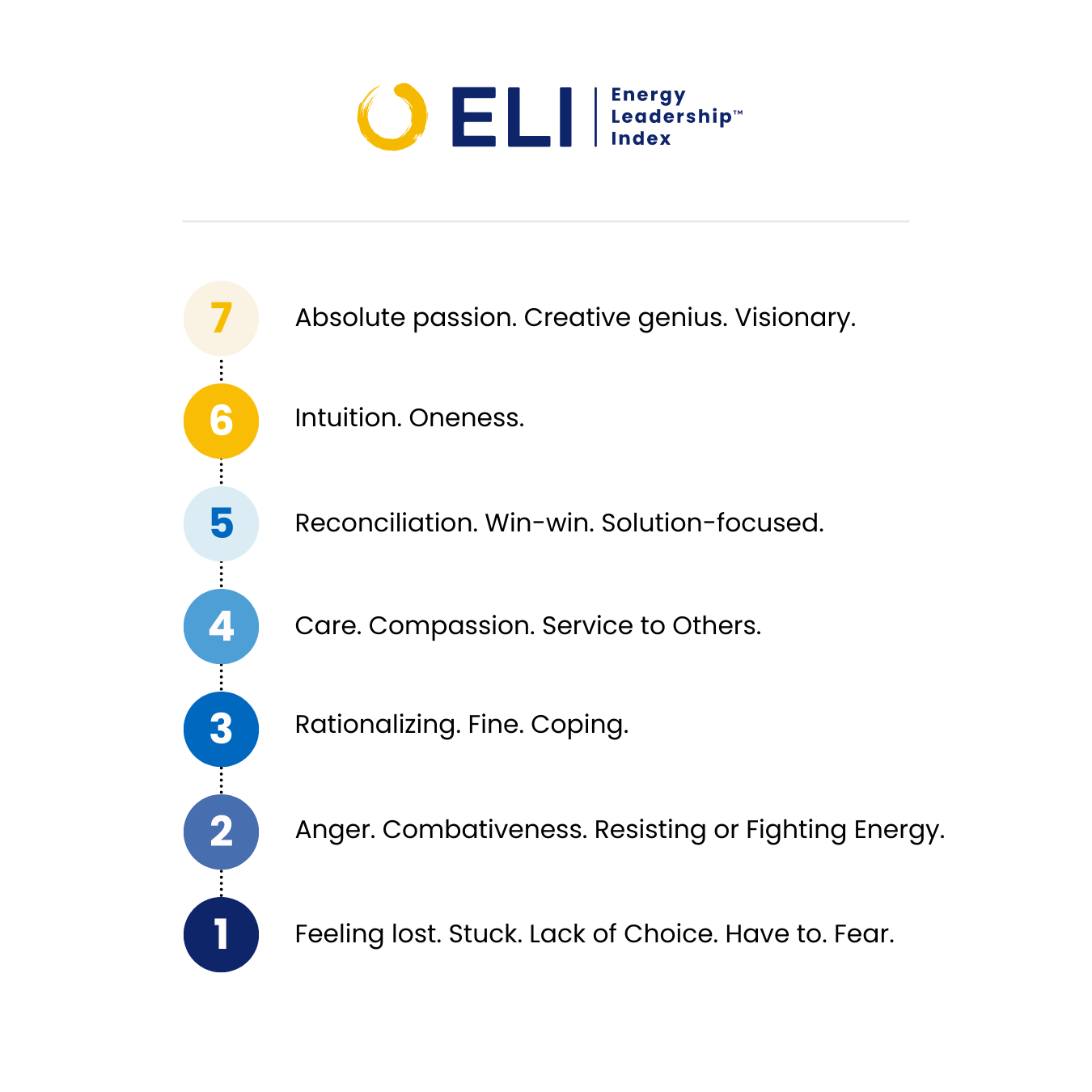
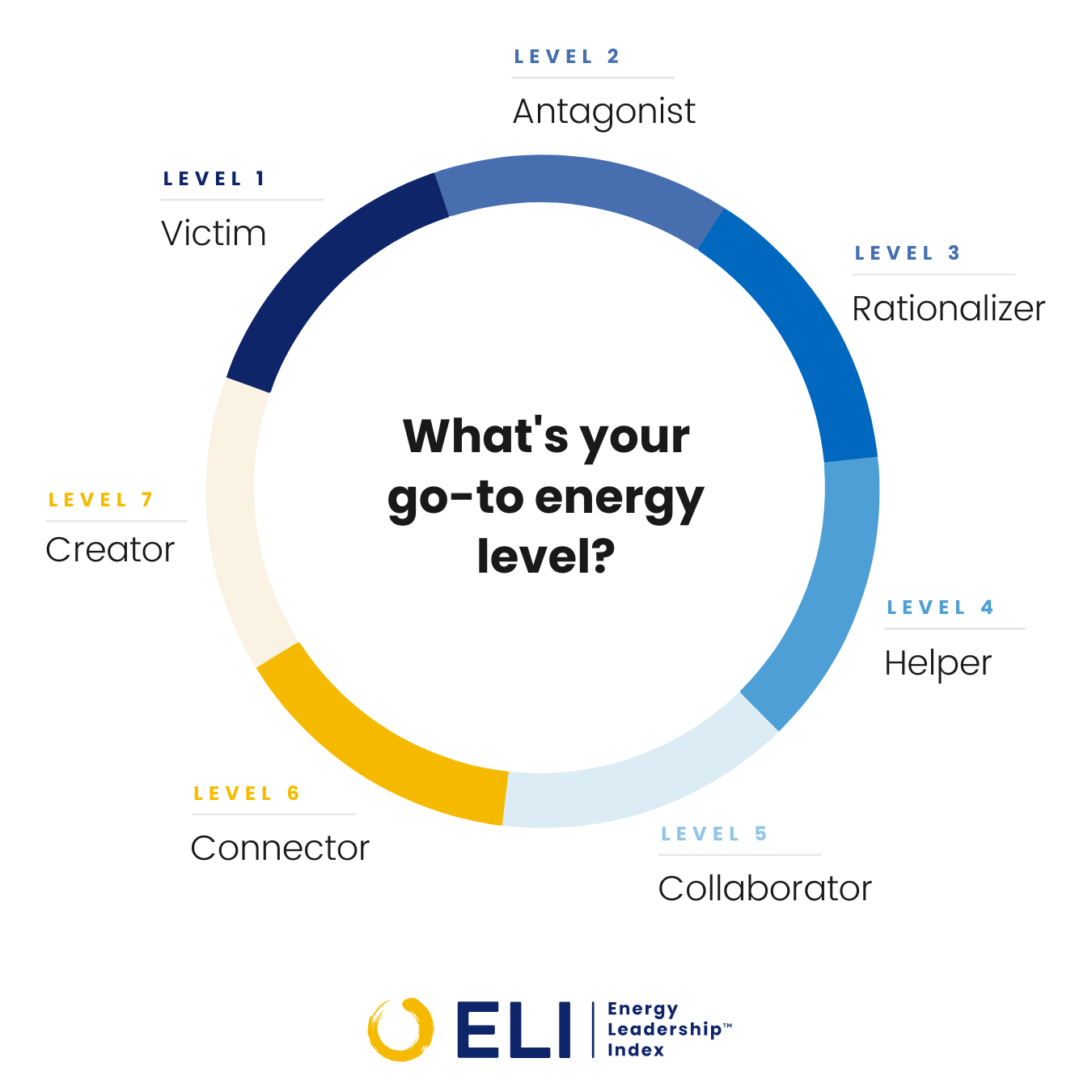
You will see how your energy moves across seven levels and how your patterns may change under stress. There is no perfect score to chase. The aim is to understand where your responses are coming from and what options open up once you can see them clearly.
For many people, this is where something begins to make sense. Patterns that have been there for a long time finally have language.

The ELI 360
The ELI is also available as a 360 assessment.
The ELI 360 adds perspective from people you work closely with, such as colleagues, peers, direct reports, or others who experience your leadership in real time. It offers a broader view of how you see yourself and how others experience your presence, communication, decision-making, and leadership.
That contrast can be useful. It can highlight strengths you may be underusing, patterns that are harder to see on your own, and places where your intention and impact may not fully match.
For those in leadership roles, or anyone wanting a fuller picture, the ELI 360 adds a layer of perspective that is difficult to get on your own.
Understand your response patterns
The ELI can help you see how you tend to meet stress, decisions, relationships, and daily demands.
It can show where you move into habit. Where you over-function. Where you withdraw. Where you push harder. Where you protect yourself. Where you become more available, creative, or connected.
The work is to see the pattern clearly, without judging it, so you can choose how you respond.