
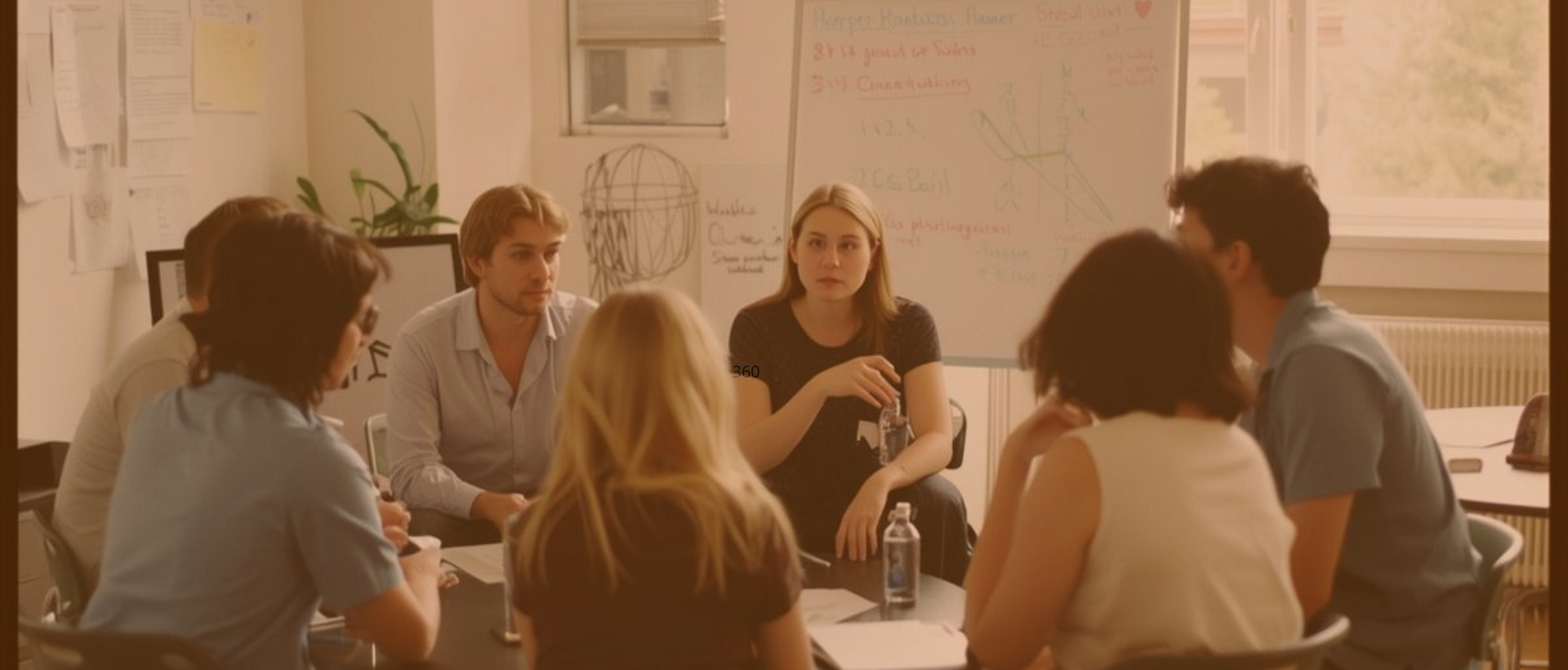
Facilitation
Some conversations are too important to leave to chance. Facilitation makes sure they actually happen.
Organizations, communities, leadership groups, and public institutions increasingly rely on facilitators to guide complex discussions, collaborative planning, retreats, and decision-making processes.
The goal is not to control the conversation. It is to create the conditions for people to listen more carefully, speak more honestly, and move through what needs to be worked through together.
Where this becomes relevant
Some conversations carry more weight than the meeting can hold. They get postponed, rushed, or scattered across hallway moments and side conversations.
People are present, but not everything is said. What matters most does not always get the space it needs. And more time alone in the same format is not what moves it forward.
Facilitation is useful when something needs to be worked through together, but the path is not straightforward. It may be a retreat, a leadership conversation, a team reset, a planning session, or a decision that does not have a clear answer.
At other times, it is less defined. Communication feels strained, alignment is not quite there, or people sense that something important is sitting beneath the surface.
What this makes possible
When a conversation is held with more structure and attention, people tend to listen more carefully and speak more directly.
Different perspectives can be heard without the conversation losing direction. What has been hard to name becomes easier to work with. Decisions feel more considered because the room has had enough space to think.
Facilitation does not remove the difficulty. It changes how the group moves through it.

How I approach facilitation
I do not show up with slides or a content plan. I design the structure, hold the process, and guide the pace of the conversation.
At times, that means slowing things down so people can hear themselves think. At others, it means staying with something that would otherwise be avoided or moved past too quickly.
The goal is not to lead from the front, but to help the room do its best thinking.
My approach is grounded in forum-style facilitation shaped by confidentiality, presence, and experience-sharing. I am trained and certified through the International Facilitators Organization (IFO), and that informs how these spaces are designed and held.
Work with me as a facilitator
I work with groups that need a more intentional space for conversations that matter.
This may include retreats, peer learning, leadership conversations, team reflection, collaborative planning, practitioner development, or moments when a group needs to pause and think together more deliberately.
As facilitation becomes more essential across organizations, communities, and professional spaces, the need is not only for better meetings. It is for spaces where people can listen well, work with complexity, and continue developing the craft of thinking together.
I can support that by designing and facilitating a single session, supporting an ongoing group, or creating space for facilitators and leaders to keep learning from one another.